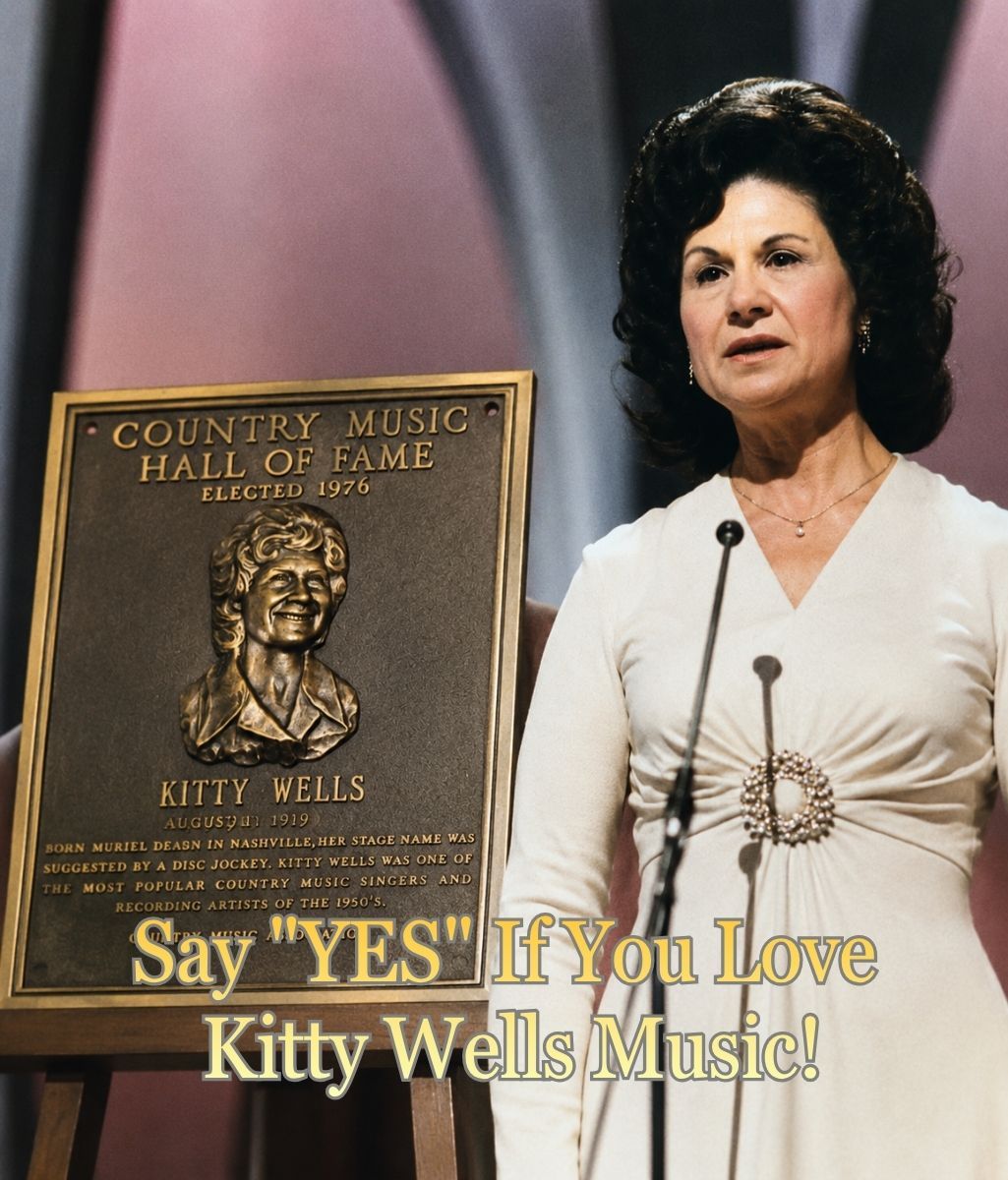
In 1952, Kitty Wells achieved something no woman in country music had ever accomplished before. Her groundbreaking hit, “It Wasn’t God Who Made Honky Tonk Angels”, reached No. 1 on Billboard’s Country chart, making her the first female country artist to top the chart with a solo recording. What seemed like a bold new song quickly became one of the most influential recordings in the history of country music.
Some songs become popular for a season. Others change the course of history.
When Kitty Wells stepped into the recording studio to record “It Wasn’t God Who Made Honky Tonk Angels”, few could have predicted the extraordinary impact it would have. At the time, country music remained largely dominated by male voices, and women were rarely given the opportunity to tell their own stories from their own perspective. The industry’s expectations were firmly established, and few artists dared to challenge them.
Kitty Wells did.
Released in 1952, the song immediately stood apart from nearly everything audiences had heard before. Rather than accepting the familiar narratives that often placed blame solely on women, “It Wasn’t God Who Made Honky Tonk Angels” offered a thoughtful response from a woman’s point of view. It challenged long-held assumptions with honesty and dignity, giving voice to emotions and experiences that had rarely been acknowledged in mainstream country music.
The response was extraordinary.
The recording climbed to No. 1 on Billboard’s Country chart, making Kitty Wells the first woman in country music history to achieve a solo chart-topping country hit. The milestone represented far more than commercial success. It marked a turning point for an entire genre, demonstrating that audiences were eager to hear women’s stories told with authenticity and conviction.
At a time when opportunities for female performers remained limited, Kitty Wells proved that talent, honesty, and courage could overcome barriers that had existed for decades. Her success challenged industry assumptions and encouraged record labels to invest more seriously in female artists whose voices deserved equal recognition.
What made the achievement even more remarkable was the quiet determination behind it. Kitty Wells was never known for seeking controversy or public attention. Her strength came through her music. She allowed the song itself to speak, trusting that listeners would recognize its sincerity. That authenticity became one of the defining reasons the recording continues to resonate more than seventy years later.
The impact extended far beyond one remarkable single.
As country music evolved through the following decades, countless female artists benefited from the path Kitty Wells helped create. Legendary performers such as Loretta Lynn, Tammy Wynette, Dolly Parton, Reba McEntire, and many others entered an industry that had become more willing to embrace women’s perspectives because of the doors Wells had courageously opened. Each generation built upon the foundation she established, expanding opportunities for women to write, record, and perform stories that reflected their own lives.
While every artist brought her own unique style and voice, many shared something important with Kitty Wells—a commitment to honesty. They sang about family, resilience, love, heartbreak, independence, and hope with an authenticity that audiences deeply appreciated. Without Wells’ groundbreaking success in 1952, that evolution may have unfolded very differently.
Looking back today, it becomes clear that “It Wasn’t God Who Made Honky Tonk Angels” represented much more than an unforgettable hit record. It became a cultural milestone that demonstrated music’s extraordinary ability to challenge assumptions while bringing people together through understanding and shared experience. The song showed that country music could grow stronger by welcoming more voices and more perspectives.
Throughout her remarkable career, Kitty Wells remained admired not only for her extraordinary talent but also for her humility and quiet professionalism. She never needed elaborate performances or dramatic headlines to earn the respect of audiences. Her voice, her songs, and her integrity spoke more powerfully than publicity ever could.
Today, more than seven decades after that historic recording, Kitty Wells’ influence continues to be felt throughout country music. Every generation of female artists who confidently shares her own story stands, in some measure, on the path that Wells helped create. Her legacy reaches far beyond awards or chart positions. It lives in every opportunity her success made possible.
Perhaps that is why her story remains so inspiring. She did not simply record a successful song or achieve an impressive milestone. She quietly changed the direction of country music forever. By believing that a woman’s voice deserved to be heard with the same honesty, dignity, and respect as anyone else’s, Kitty Wells helped reshape one of America’s greatest musical traditions.
Today, “It Wasn’t God Who Made Honky Tonk Angels” remains one of country music’s most important recordings—not only because it reached No. 1, but because it forever changed who had the opportunity to stand behind the microphone. Some artists leave behind unforgettable songs. Kitty Wells left behind something even greater: a legacy that gave generations of women the confidence to tell their own stories, ensuring that country music would never sound the same again.
Video