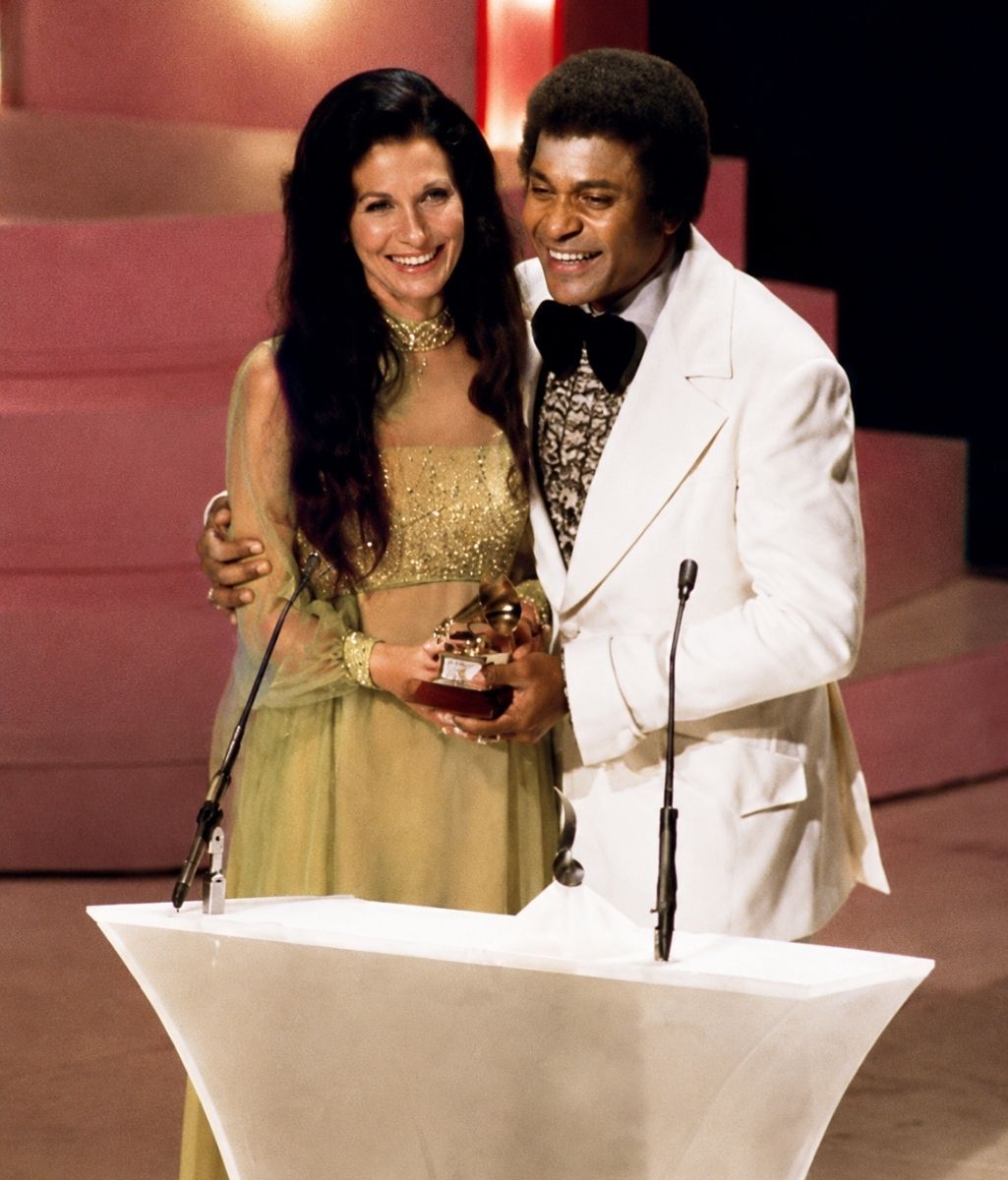
When Charley Pride was named Entertainer of the Year at the 1972 Country Music Association Awards, he made history as the first Black artist to receive country music’s highest honor. Over the years, one story has continued to surround that unforgettable night—a story about Loretta Lynn, a heartfelt embrace, and a moment that has come to symbolize respect, friendship, and the power of music to bring people together.
Some moments in history are remembered because they are carefully planned. Others endure because they happen in a single, spontaneous instant that captures the spirit of an entire generation.
The 1972 Country Music Association Awards was one such evening.
When Charley Pride’s name was announced as Entertainer of the Year, the audience erupted in applause. It was far more than another award presentation. It marked a historic milestone for country music, as Pride became the first Black artist ever to receive the organization’s highest honor. His achievement represented years of extraordinary perseverance, remarkable talent, and quiet determination in a genre where he had overcome barriers that many believed could never be broken.
For those watching at home, it was an unforgettable moment.
Over the years, a story has frequently been told about what happened next. According to the account that has circulated for decades, Loretta Lynn, who was presenting the award, had been advised by someone behind the scenes not to embrace Charley Pride on live television if he won. Whether every detail of that story can be fully verified today remains uncertain. Like many stories passed down through generations, parts of it have become difficult to document with complete historical certainty.
What is beyond dispute, however, is the image that millions of people remember.
As Charley Pride walked toward the stage to accept country music’s highest honor, Loretta Lynn greeted him warmly before a national television audience. Their embrace became one of the defining images of the evening—not because it was dramatic, but because it felt entirely genuine. It reflected two artists who understood one another not through shared backgrounds, but through shared struggles, extraordinary perseverance, and a deep respect for the music they both loved.
By 1972, Charley Pride had already established himself as one of country music’s most admired performers. His unmistakable voice, heartfelt songs, and gracious character had earned him devoted fans across America. Yet his journey had demanded far more than musical talent alone. Throughout his career, he navigated challenges that few other artists of his generation were asked to face, responding not with anger or bitterness but with remarkable dignity and unwavering professionalism.
Loretta Lynn understood hardship in her own way.
Raised in poverty in the hills of Kentucky, she built one of country music’s most extraordinary careers through determination, honesty, and fearless storytelling. Her songs gave voice to working families, women, and everyday Americans whose experiences were often overlooked. She knew what it meant to challenge expectations and to earn success through persistence rather than privilege.
Perhaps that shared understanding explains why their friendship resonated so deeply with audiences.
The embrace between Loretta Lynn and Charley Pride represented far more than a congratulatory gesture. It reflected mutual admiration between two artists who had each overcome enormous obstacles to stand among country music’s greatest voices. Their respect for one another extended beyond awards ceremonies and public appearances. It was rooted in a shared belief that authentic music has the power to unite people regardless of background or circumstance.
Looking back more than fifty years later, photographs from that remarkable evening continue to carry profound emotional significance. They remind us that history is often shaped not only by official announcements or trophies, but also by simple acts of kindness witnessed by millions. In an era when racial divisions remained painfully visible throughout much of American society, images of warmth, friendship, and mutual respect carried a meaning that extended well beyond the entertainment industry.
Charley Pride’s remarkable career helped expand opportunities for future generations of country artists, demonstrating that exceptional talent could transcend barriers that once seemed impossible to overcome. At the same time, Loretta Lynn’s public display of respect reflected the compassion and authenticity that made her one of country music’s most beloved figures. Together, they represented the very best qualities of the genre they loved—honesty, resilience, humility, and humanity.
Today, the image remains one of the most memorable from country music’s golden era. Whether people remember it for its historical significance, its emotional sincerity, or the enduring friendship it symbolized, the message continues to resonate across generations.
Some awards celebrate remarkable achievements. Others become unforgettable because of the human moments surrounding them. Charley Pride’s historic victory and Loretta Lynn’s heartfelt embrace remind us that while music can entertain millions, its greatest power has always been its ability to bring people together. Long after the applause faded and the cameras stopped rolling, that simple moment continued to tell a story of courage, acceptance, and hope—one that remains every bit as meaningful today as it was in 1972.